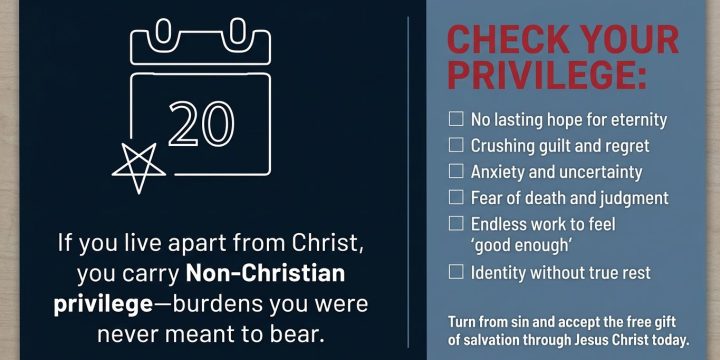
The phrase “check your privilege” has become a familiar slogan in modern Western culture. One of the clearest examples is the original “Check Your Christian Privilege” card. It places a calendar with a cross in the corner and the number 25—clearly evoking Christmas—next to a checklist of identity categories like race, sex, class, and ability. At the bottom, it quietly defines privilege as “unearned access to social power based on membership in a dominant social group.” The implication is simple: if your workplace or school recognizes your Christian holidays, you are part of an oppressive majority that owes the world an apology. On the surface, this looks like a compassionate attempt to raise awareness for minorities. But underneath, it subtly disciples Christians into seeing God’s gifts as something to be…
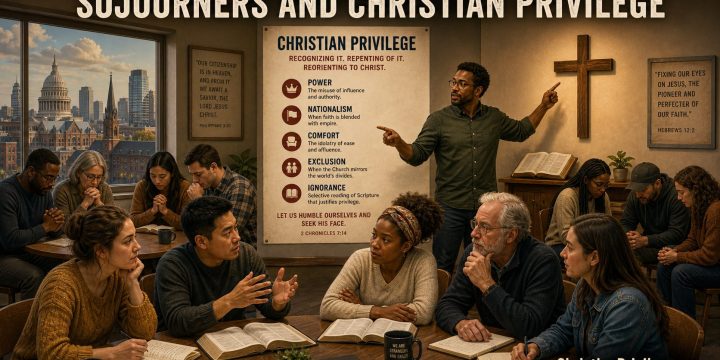
Sojourners and Christian privilege: Naming sin without erasing Christian privilege The Sojourners article “Recognizing ‘Christian Privilege’” approaches Christian privilege as “the social dominance and unearned benefits that generally flow to Christianity’s followers in the United States.” Unlike some secular critiques, it writes self‑consciously as a Christian voice warning fellow believers against blindness to majoritarian power. Many of its examples—that Christians can assume chaplains share their faith, that politicians court them, that their holidays shape public schedules—are descriptively sound, paralleling some of the “public symbolism” concerns summarized at ChristianPrivilege.com. Here the case on ChristianPrivilege.com can actually support part of Sojourners’ contention while qualifying its conclusions. The article frankly acknowledges that Christians in America have often mistaken majority comfort for neutrality and have too seldom reflected on how their norms affect neighbors. It grants that Christians can inherit advantages…
Christians should embrace the language of “Christian privilege” only if we are willing to redefine it the way Scripture does: not as a weapon in culture wars, but as a description of the unearned grace we receive in Christ and the responsibility we bear to serve the most vulnerable, including people with disabilities. The Key Ministry article begins by noticing that “Christian privilege” is often defined in social justice circles as “unearned access to resources (social power) … available to some people because of their social group membership”, a kind of invisible advantage that benefits Christians over others. This is similar to how “Christian privilege” is discussed more broadly as a social advantage bestowed upon Christians in historically Christian societies. Key Ministry affirms that, if we are talking about salvation, the phrase…
The history of life on Earth, far from undermining the biblical account of creation, delivers one of the most powerful scientific arguments for the existence of an intelligent, purposive Creator. The central exhibit is what scientists themselves call the "Cambrian explosion" — a geologically instantaneous eruption of fully formed, morphologically complex animal body plans in the fossil record, beginning approximately 538–541 million years ago, without gradual precursors and without a Darwinian explanation that has stood up to scrutiny. When placed alongside its predecessor, the Avalon explosion, and subsequent biological "big bangs" throughout life's history, the pattern is unmistakable: life does not creep gradually from simplicity to complexity, it arrives in quantum leaps of specified biological information that point inescapably to a Mind behind the matter. Scripture anticipated this pattern long…
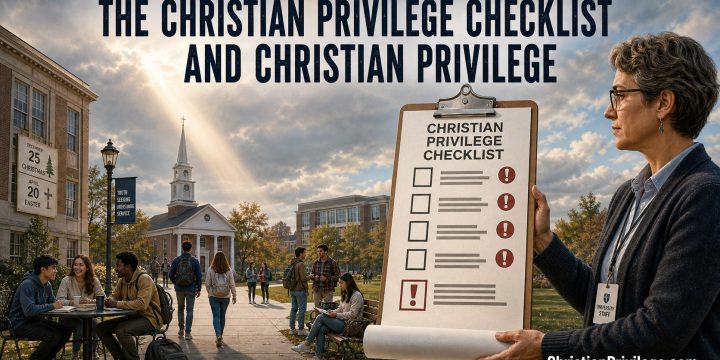
When diagnosis becomes dogma The Project Humanities “Christian Privilege Checklist” at Arizona State University presents dozens of statements like “You can travel to any part of the country and know your religion will be accepted” as evidence of unfair advantage. It aims to expose what Peggy McIntosh called the “invisible knapsack” of privilege, here applied to Christians. The document’s strength lies in its anecdotal accuracy: many American Christians do find churches, chaplains, and social familiarity in most locales. But the list quietly shifts from observation to moral condemnation, treating all such advantages as suspect by default. The argument at ChristianPrivilege.com insists that privilege analysis is incomplete until it addresses what the privileged worldview actually says about reality. If Christianity is false, Christian privilege is indeed dangerous: it props up error, burdens dissenters, and confuses the state’s task. If Christianity is…
A Research Paper on the Cosmological Evidence for Divine Creation The first and most foundational argument for the Christian worldview is deceptively simple: the universe began to exist, and whatever begins to exist requires a cause outside itself. That cause, as philosophical and scientific reasoning converges to demonstrate, must be uncaused, timeless, spaceless, immaterial, and personal — a description that maps precisely onto the God of Christian Scripture. This paper examines the scriptural testimony that God created the universe, the philosophical and scientific evidence that corroborates it, and the decisive failures of the four principal naturalistic alternatives: the oscillating universe, the cosmic seed, the infinite (steady-state) universe, and the multiverse. Special attention is given to the logical self-destruction of Lawrence Krauss's multiverse argument, which commits the fundamental error of treating…
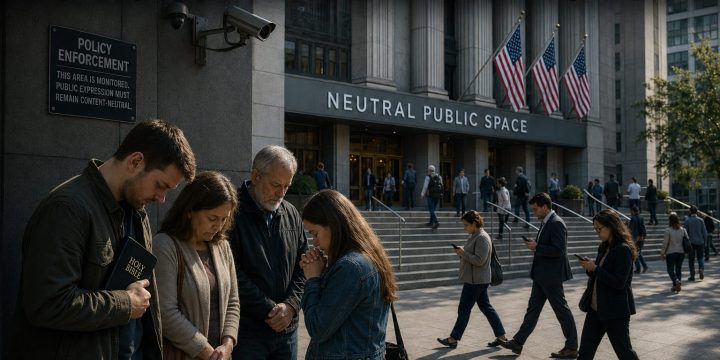
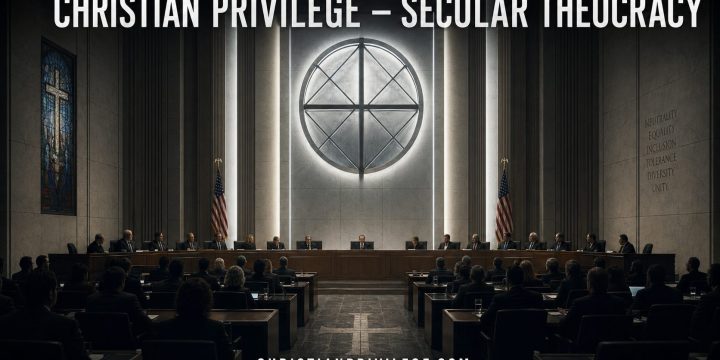
Christian Privilege and the Promise of Neutrality The modern argument against Christian Privilege usually arrives dressed as a simple appeal to fairness. Christians, it says, have enjoyed too much cultural deference, too much moral influence, too much institutional familiarity, and too much access to the symbols and language of national life. The cure, we are told, is not persecution but neutrality. That word does enormous work. It sounds calm, procedural, civilized, almost antiseptic. But if the campaign against Christian Privilege were ever pursued seriously rather than rhetorically, neutrality would not remain neutral for long. It would require administrators, policies, standards, investigations, and enforcement mechanisms able to identify, measure, and reduce Christian influence wherever it appeared too visible, too normal, or too successful. That is the dirty secret buried inside the critique of Christian Privilege: its…
Christian Privilege and the Rebranding of Religious Liberty The most politically effective criticism of Christian Privilege does not usually demand the abolition of religion outright. It does something subtler and more dangerous. It redefines visible Christian participation in public life as a constitutional problem rather than a constitutional right. Once that reframing succeeds, the Free Exercise Clause is no longer understood as protection for believers living publicly according to conviction. It becomes little more than permission to believe privately and discreetly. That is a radical downgrade of American liberty. The First Amendment does not merely prevent Congress from establishing a national church; it also forbids government from “prohibiting the free exercise” of religion. The Constitution Annotated describes the Religion Clauses together as protections for “individual freedom of religion and separation of…
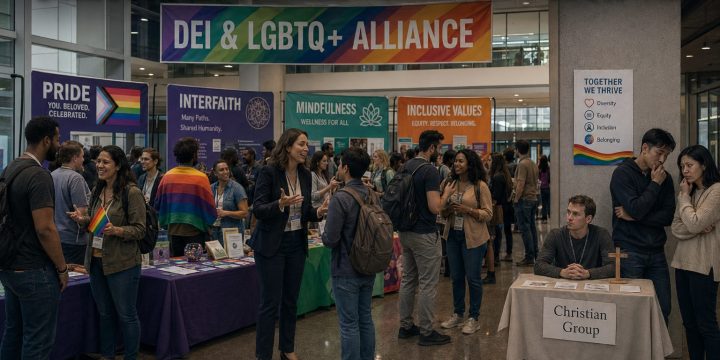
Christian Privilege and the New Inclusion Paradox The modern critique of Christian Privilege usually borrows the language of diversity, equity, and inclusion. It presents itself as a moral correction to an older America in which Christianity supposedly occupied too much public space, enjoyed too much automatic deference, and imposed too many assumptions on everyone else. The pitch is simple: if society becomes more alert to Christian Privilege, public institutions will become more welcoming to all. But the reality is often the opposite. Once Christian Privilege becomes the lens through which institutions interpret Christian presence, Christianity is no longer treated as one form of diversity among many. It becomes the embarrassing exception to diversity—the kind of identity institutions are willing to “include” only after it has been translated, softened, or made politically harmless. That is the…
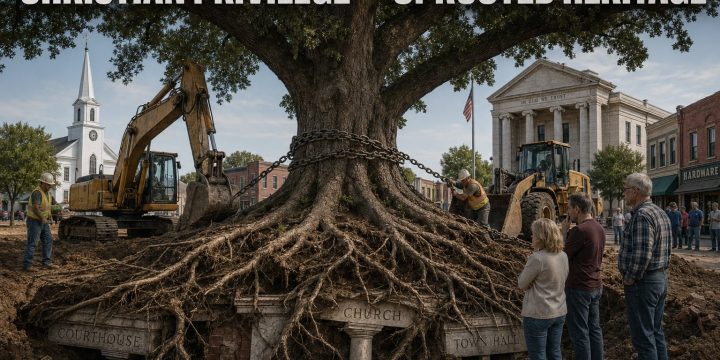
Christian Privilege and the Fantasy of Cultural Self-Creation But that promise rests on a fantasy—the fantasy that a civilization can amputate its own roots and remain standing. No country invents itself from scratch. Every nation inherits language, moral instincts, rituals, institutions, and assumptions from the people who built it. In the American case, those inheritances came from many streams, but Christianity was not a minor tributary hidden at the edge of the map. It was one of the main rivers that fed the whole landscape. That does not mean America was a theocracy, nor does it mean every founder was orthodox, saintly, or consistent. It means something much simpler and harder to deny: Christianity helped shape the moral grammar of the country. And once that fact is admitted, the attack on Christian…
Christian Privilege and the Dream of a Neutral Winner The social criticism of Christian Privilege is often sold as a peace plan for a divided nation. The idea is straightforward enough: if Christianity loses its special status in public life—its assumed moral authority, cultural familiarity, and institutional influence—then the public square will become fairer, calmer, and less tribal. A single dominant identity will no longer overshadow everyone else. The temperature will drop. But this is one of the most dangerous illusions in modern public life. If the strongest version of the anti-Christian Privilege project were implemented, it would not produce neutrality. It would produce a new race for official status. Once public Christianity is framed as a problem to be contained, every other moral and political faction learns the same lesson: survival requires…
The controlling thesis of this article is straightforward: if the Christian Scriptures are true, then the central moral and political objections to Christian privilege lose much of their force, because a society is not acting irrationally or unjustly when it gives public honor, legal deference, or cultural preference to what is in fact true and good. That claim does not settle every prudential or constitutional question, and it does not justify cruelty, coercion, hypocrisy, or civil disabilities for dissenters. It does mean, however, that the modern critique of “Christian privilege” usually depends on a prior assumption that Christianity is merely one identity option among many and not the true account of God, man, sin, redemption, and public morality. That is why the order of argument matters. Critics of Christian privilege in America…
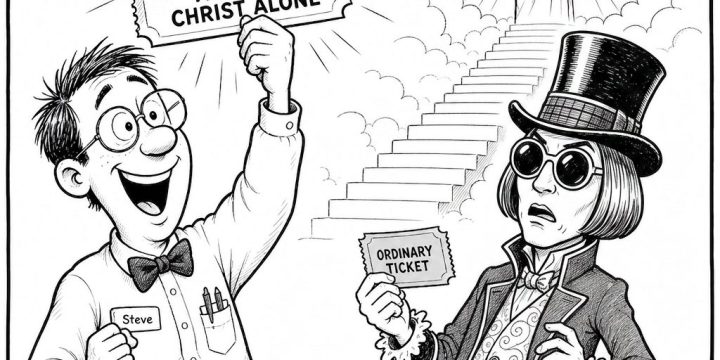
Christian Privilege Is Accepting the Real Golden Ticket When people talk about “privilege,” they usually mean advantages, status, or opportunities in this world. But there is a far greater privilege than any social, economic, or political advantage: the privilege of receiving the real golden ticket—salvation through Jesus Christ alone and the promise of eternal life. In the cartoon image, Steve realizes that what he’s holding is not a ticket to a factory or a fantasy, but to forgiveness, reconciliation with God, and everlasting joy in His presence. That picture is a powerful metaphor for what the Bible calls the gospel, the “good news” of Jesus Christ. The Golden Ticket We All Need The Bible says that every human being has the same basic problem: sin. Sin is not just “big” wrong things;…
Christian Privilege and the Fantasy of Perfect Balance The criticism of Christian Privilege usually presents itself as a demand for fairness. The claim is that Christians, by virtue of numbers and history, enjoy disproportionate influence in law, culture, and institutions, and that justice requires “balancing” this influence so no tradition dominates. On the surface, this sounds like a simple matter of equity—just adjust the dials until every group’s social footprint matches its demographic size. That picture is a fantasy. Influence in a free society is not a resource that can be rationed by a central accountant. It emerges from millions of voluntary decisions: where people worship, which schools they found, what causes they fund, which books they write, how they vote, which charities they build, and how deeply their convictions shape their…
If Christian Scriptures Are True, Don't Christians Deserve Privilege? The controlling thesis of this article is straightforward: if the Christian Scriptures are true, then the central moral and political objections to Christian privilege lose much of their force, because a society is not acting irrationally or unjustly when it gives public honor, legal deference, or cultural preference to what is in fact true and good. That claim does not settle every prudential or constitutional question, and it does not justify cruelty, coercion, hypocrisy, or civil disabilities for dissenters. It does mean, however, that the modern critique of “Christian privilege” usually depends on a prior assumption that Christianity is merely one identity option among many and not the true account of God, man, sin, redemption, and public morality. ... Read More Below…
Christian Privilege and the Strange Logic of the New Orthodoxy The modern critique of Christian Privilege presents itself as a campaign for neutrality, fairness, and a truly inclusive public square. But when you follow its logic to the end, it does not create neutrality at all. It creates a new orthodoxy—one that does not merely ask Christianity to share space, but demands that Christianity surrender moral legitimacy whenever it enters public life. That is the irony at the center of the Christian Privilege debate. A theory that claims to oppose cultural domination often smuggles in its own preferred creed: religion is acceptable only when privatized, muted, and stripped of its power to shape common life. Christianity may be tolerated as a personal hobby, much like gardening or knitting, but the moment it informs…
In American academic and social justice discourse, "Christian Privilege" has become a widely deployed concept describing the unearned advantages that Christians receive by virtue of being the religious majority in the United States. Scholars and advocates have catalogued dozens of examples — from federally recognized holidays to unexamined assumptions in courtrooms, workplaces, and media. The core argument is straightforward: when the dominant religion of a country's culture and government shapes its laws and institutions, members of minority faiths are disadvantaged. This report accepts that logic at face value and turns it 180 degrees. If majority-religion privilege is real, identifiable, and worth criticizing in America, then the same framework applied with equal intellectual rigor to Egypt, Syria, Iran, Saudi Arabia, and Sudan — all Muslim-majority nations — should produce the same…
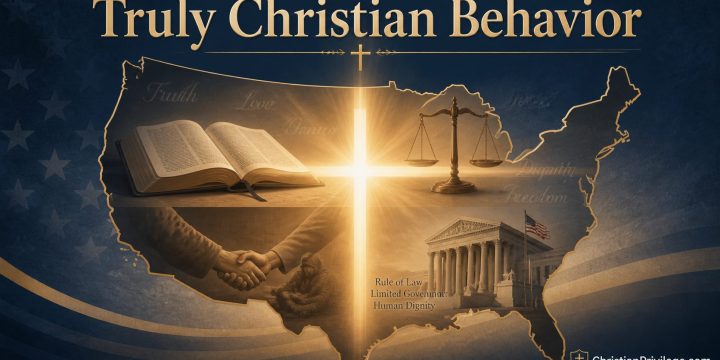
Christianity, at its core, is a faith system built on the twin commandments to love God with all one's heart and to love one's neighbor as oneself — a framework that has demonstrably shaped the most consequential nation in human history. The United States of America did not emerge from a vacuum. Its founding documents, its institutions, its culture of ordered liberty, and its eventual self-correction on historic moral failures all draw meaningfully from a Christian theological inheritance. To acknowledge this is not to claim the nation has been perfectly Christian — it has not — but rather to observe that its greatest achievements reflect Christian ideals applied faithfully, and its greatest failures reflect those same ideals abandoned or distorted. The modern critique of “Christian privilege” frames this legacy through…
A Response to the Critics of "Christian Privilege" in America Find the right tree on a hot August afternoon and you will understand something about civilization that no lecture can teach. The shade beneath a great oak is not an accident. It is the accumulated result of decades — sometimes centuries — of growth, of roots driving deep into the earth, of branches spreading wide because the seed and soil and years all conspired together in exactly the right way. You did not plant this tree. You arrived beneath it already grown. You are cool where others are not. You are sheltered where others burn. Now imagine someone standing at the edge of that shade, enjoying every benefit of it — the coolness, the breeze through the canopy, the sturdy…
There is a food court somewhere in the middle of America that has become, without anyone quite planning it, a perfect metaphor for the most contentious arguments in our national life. Walk past the entrance and the place you'll notice first — the one with the longest lines, the warmest bread smell drifting into the corridor, the quiet hum of satisfied conversation — is the Italian restaurant. It's been there the longest. It built the building. The tile work around the doorframe is hand-painted in green, white, and red. A chalkboard by the door announces the day's specials in Italian script. The menu is unapologetically Italian. Next door is a Mexican restaurant. Next to that, a Thai place. Down at the end of the hall, an Indian kitchen, a Greek…
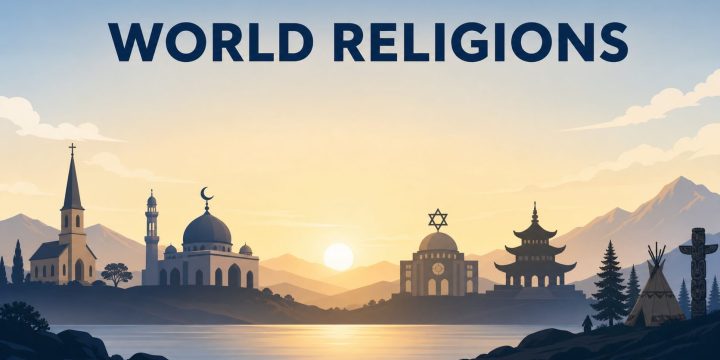
This report surveys the eight major world religious categories — Christianity, Islam, Hinduism, Buddhism, Judaism, Sikhism, and two secular categories (the religiously unaffiliated/atheist/agnostic) — using the most current data from the Pew Research Center, the World Population Review, and other authoritative demographic sources. For each religion, it identifies global adherent counts, American adherent counts, the percentage of Americans who practice non-Christian faiths, the countries where each religion is the dominant majority, and the percentage of Christians residing within those non-Christian-majority nations. Global Religious Population at a Glance (2020–2025) The most recent Pew Research Center analysis of the global religious landscape, covering 201 countries and tracking changes from 2010 to 2020, found the following distribution: Religion Global Adherents (approx.) % of World Population Christianity 2.3 billion 28.8% Islam 2.0 billion 25.6% Unaffiliated /…
The Religious Food Court and Christian Privilege There is a food court somewhere in the middle of America that has become, without anyone quite planning it, a perfect metaphor for the most contentious arguments in our national life. Walk past the entrance and the place you'll notice first — the one with the longest lines, the warmest bread smell drifting into the corridor... Read More Shade, Roots, and Leaves That Don’t Look Like Yours Find the right tree on a hot August afternoon and you will understand something about civilization that no lecture can teach. The shade beneath a great oak is not an accident. It is the accumulated result of decades — sometimes centuries — of growth, of roots driving deep into the earth, of branches spreading wide because…
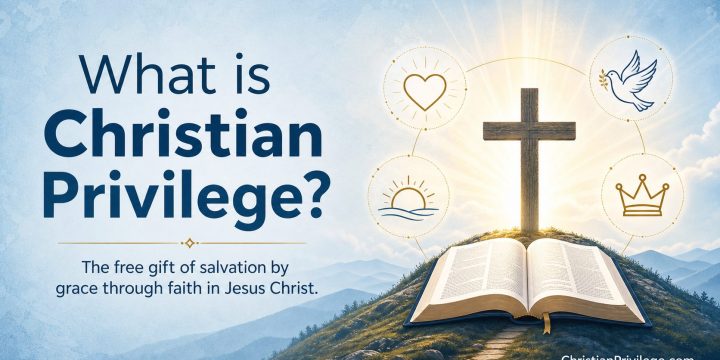
Christian Privilege, rightly understood through the lens of Scripture, is not a social construct or a cultural status symbol — it is a divine endowment. It is the extraordinary, unmerited standing granted to every believer in Jesus Christ by virtue of God's sovereign plan of salvation. This privilege originates not in human achievement, cultural dominance, or institutional power, but in the eternal will of God — a will that was set before the foundation of the world, progressively revealed through covenants and prophecy, definitively accomplished in the life, death, and resurrection of Jesus Christ, and now freely offered to every soul who believes. The pages that follow trace this great privilege from its primordial promise in the Garden of Eden through its prophetic unfolding in the Hebrew Scriptures, its magnificent…
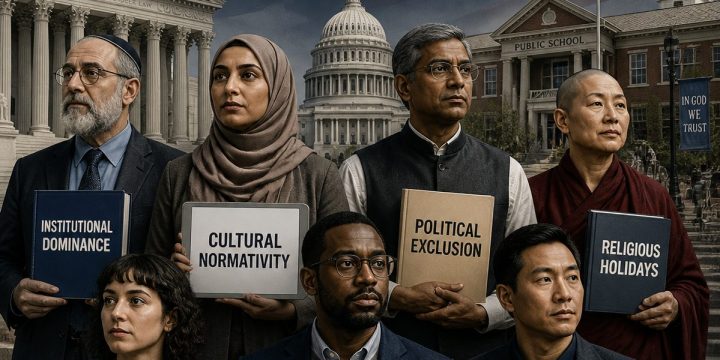
Major Criticisms of Christian Privilege in America A Scholarly Survey of the Principal Critiques See Responses to Critics of “Christian Privilege” in America Introduction The concept of "Christian privilege" refers to the social, cultural, legal, and institutional advantages that accrue to Christians in American society by virtue of their status as the dominant religious majority. First formally named in the academic literature by Lewis Z. Schlosser in 2003, the concept has since been elaborated by sociologists, education scholars, legal critics, psychologists, and civil liberties advocates. The following report catalogs the major criticisms of Christian privilege in America, presenting each critique in the words of its most prominent scholarly and activist voices. No attempt is made here to refute or qualify these critiques; they are presented to speak for themselves. …
CHRISTIANS HAVE THE PRIVILEGE OF EXPERIENCING AMAZING FREEDOM FROM GUILT AND REGRET. THEY SLEEP WELL. THEY SMILE. THEY ARE AT PEACE. HAVE HOPE - HAVE CHRISTIAN PRIVILEGE People say there is no freedom in a religion that restricts your behaviors, yet in their “freedom,” they have become slaves to guilt, regret and the consequences of their actions. They’ve hurt people with their selfishness and they know it’s wrong. They don’t sleep. They don’t have peace. They don’t have hope. There is a heaviness on their lives. But you can have hope. I was in the Mountain Phase of Ranger School when I prayed. I didn’t know God, but I knew I was at the end of my strength and God was the only place I could think to turn. Sitting…