Christian Nationalism Christian Privilege: A Familiar Pattern of Criticism
Public criticism of Christianity has not disappeared—it has evolved. What was once framed as opposition to “moral majority” influence is now reframed under the label of “Christian Nationalism.” According to Pew Research Center, awareness of the term has grown rapidly in recent years, signaling a cultural shift in how Christian influence is discussed.
Rather than presenting entirely new concerns, many of these critiques echo longstanding objections: that Christianity holds too much cultural influence, that it shapes public policy, and that it marginalizes opposing viewpoints. The terminology may change, but the underlying argument remains consistent—Christian presence in public life is viewed with suspicion.
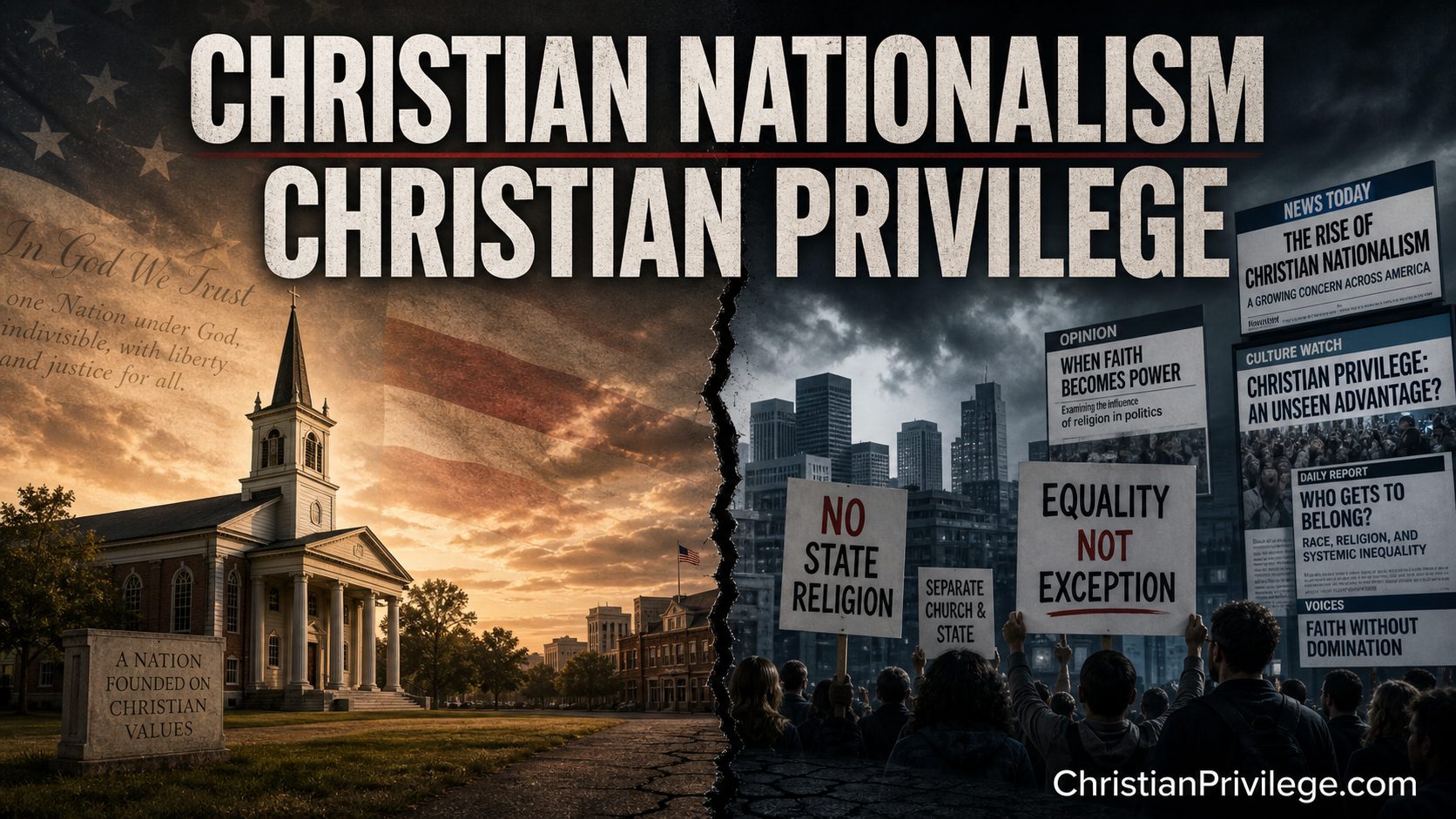
This pattern suggests that “Christian Nationalism” is not a new phenomenon as much as it is a rebranded critique of Christian cultural influence. Each generation reframes the same concerns in language that resonates with contemporary audiences.
Must See Also: What Is Christian Privilege?
Christian Nationalism Christian Privilege: Redefining Influence as Threat
The modern use of “Christian Nationalism” often shifts the narrative from influence to threat. Christianity’s historical role in shaping Western values—such as laws, holidays, and moral norms—is increasingly portrayed as exclusionary rather than foundational.
For example, discussions about prayer in schools, religious symbols in public spaces, or faith-informed policymaking are frequently cited as evidence of overreach. Yet these same elements have long been part of American cultural identity, as noted in Library of Congress historical archives, which document the longstanding intersection of faith and public life.
What has changed is not the presence of Christianity, but the interpretation of that presence. Actions once considered expressions of cultural heritage are now framed as political dominance. This reframing contributes to the perception that Christian influence must be reduced or removed.
Must See Also: Examples of Christian Privilege in America
Christian Nationalism Christian Privilege: The Cycle of Cultural Rebranding
Criticism of Christianity tends to follow a cyclical pattern. In previous decades, terms like “religious right” or “fundamentalism” served as focal points for concern. Today, “Christian Nationalism” fills that role.
According to Brookings Institution analysis, religion has consistently been a point of tension in American political discourse, regardless of the specific terminology used at the time.
Each new label carries the implication of urgency or danger, but the core accusation remains largely unchanged: that Christians wield undue influence. This repetition suggests that the issue is less about specific behaviors and more about the broader presence of Christianity in society.
By recognizing this pattern, it becomes easier to see how new criticisms may simply be updated versions of longstanding objections.
Must See Also: Is Christian Privilege Real?
Christian Nationalism Christian Privilege: A Continuing Cultural Debate
The framing of Christianity as a source of privilege or power continues to shape public discourse. Whether labeled as “Christian Privilege” or “Christian Nationalism,” the underlying debate centers on the role of faith in public life.
While critics argue that Christianity holds disproportionate influence, others contend that such claims overlook the religion’s declining affiliation rates, as shown in Gallup polling data, which indicate a gradual decrease in religious identification in the United States.
This tension reflects a broader cultural shift: as society becomes more pluralistic, longstanding institutions—including Christianity—are increasingly scrutinized. However, the persistence of similar critiques across decades suggests that the conversation is less about new developments and more about enduring disagreements.
Must See Also: Christian Privilege in Modern Society