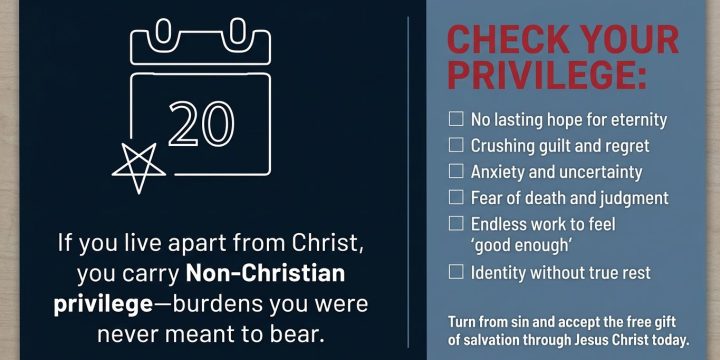
The phrase “check your privilege” has become a familiar slogan in modern Western culture. One of the clearest examples is the original “Check Your Christian Privilege” card. It places a calendar with a cross in the corner and the number 25—clearly evoking Christmas—next to a checklist of identity categories like race, sex, class, and ability. At the bottom, it quietly defines privilege as “unearned access to social power based on membership in a dominant social group.” The implication is simple: if your workplace or school recognizes your Christian holidays, you are part of an oppressive majority that owes the world an apology. On the surface, this looks like a compassionate attempt to raise awareness for minorities. But underneath, it subtly disciples Christians into seeing God’s gifts as something to be…
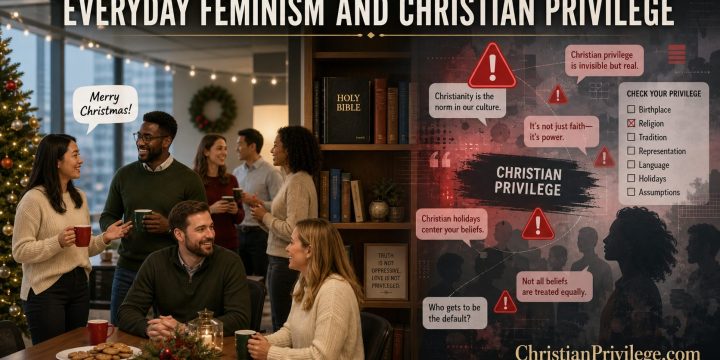
“Don’t Believe in Christian Privilege? These 15 Examples Will Make You Think Again” – Everyday Feminism Kesiena Boom’s Everyday Feminism article offers a checklist of “15 examples” meant to prove Christian privilege in the United States. Items include being able to assume one’s holidays are recognized, hearing “Merry Christmas” without offense, or having courts that do not usually punish one’s religious affiliation. Sociologically, these examples show that Christianity remains the default grammar of much American public life, a point also summarized in the description of “public norms and calendars” at ChristianPrivilege.com. The problem is the argumentative leap from “Christian norms are culturally central” to “therefore Christians hold illegitimate, unjust power.” The essay on ChristianPrivilege.com argues that asymmetry alone is not a refutation. Every serious moral community must take sides on questions of the good, human nature,…
The existence of human consciousness and rational thought is among the most profound and persistent puzzles in all of philosophy. Why does subjective experience exist at all? Why can human minds perceive truth, construct logical arguments, and engage in abstract reasoning? Materialist naturalism — the dominant secular framework — struggles profoundly to answer these questions. The Christian worldview, by contrast, offers an elegant, coherent, and scripturally grounded answer: minds exist because there is a supreme Mind behind the universe, and human rationality is derivative of divine rationality. As the Apostle Paul declares in Colossians 2:2–3, all knowledge is ultimately rooted in Christ: "in whom are hidden all the treasures of wisdom and knowledge". This is the mind-first world — and consciousness and reason fit it perfectly. The Hard Problem of…
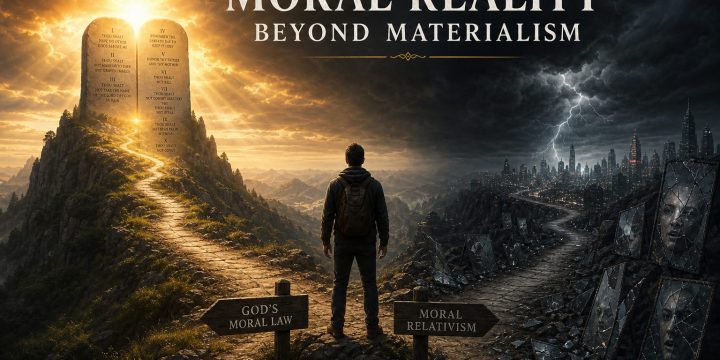
One of the most powerful and personally resonant arguments for the truth of Christian theism is the argument from moral reality. When human beings argue, protest injustice, celebrate heroism, condemn cruelty, or insist that some things are just plain wrong, they are presupposing something deeply important: that moral reality exists outside of individual preference or cultural convention. The question the Christian apologist presses is simply this — why should that be so in a purely material universe? If the cosmos is nothing more than matter in motion, particles interacting across time by impersonal physical laws, there is no mechanism by which moral obligation enters the picture. Yet the deepest moral instincts of humanity insist that it does. Christianity offers a coherent, grounded explanation for that moral reality. Materialism does not. The Christian Privilege of…
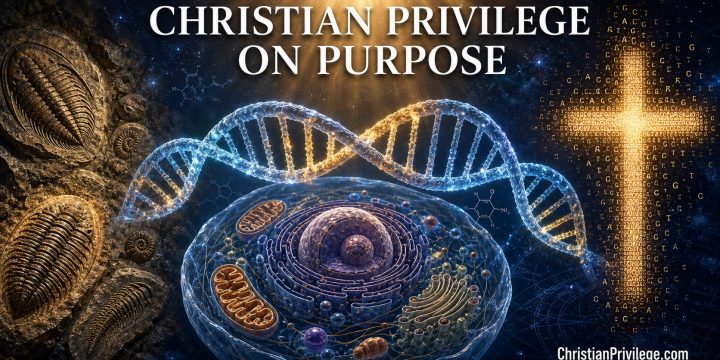
The living cell is not merely complicated — it is specified. It stores, reads, copies, and executes digital information encoded in a four-letter chemical alphabet with a precision that exceeds any technology humanity has yet devised. The Christian worldview has always taught that this is exactly what we should expect: a rational Creator made a world intelligible to rational creatures, and the deepest structures of life bear the signature of that intelligent authorship. Scripture anticipated what molecular biology would later confirm. As the psalmist wrote, "For You formed my inward parts; You wove me in my mother's womb. I will give thanks to You, for I am fearfully and wonderfully made; Wonderful are Your works, and my soul knows it very well" (Psalm 139:13–14, NASB 1995). The argument from biological information is not…
The Case for Divine Creation and the Failure of Naturalistic Origins The question of how life originated from non-life stands as one of the most consequential debates in the history of science and theology. At its core, the contention is simple: either life is the product of an unguided, purposeless chemical accident, or it is the deliberate act of an intelligent Creator. This paper argues — drawing from Scripture, credentialed scientists, philosophers, and the observable limits of modern chemistry — that the biblical account of God as the Author of life is not only coherent but is, in fact, the only explanation that accounts for all the evidence. The materialist alternatives, when subjected to honest scientific scrutiny, collapse under the weight of their own assumptions. Life, in its very nature,…
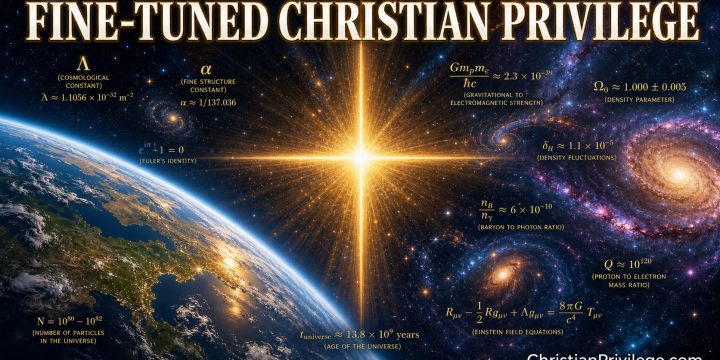
A Deep-Dive into Fine-Tuning The fine-tuning of the universe for life stands as one of the most potent scientific-philosophical arguments for the existence of a divine Creator. When the constants of physics, the cosmological initial conditions, and the precise resonance states of elemental chemistry are examined carefully, they reveal a pattern of exquisite precision that strains credibility under any purely naturalistic account. This paper argues — drawing on the work of leading physicists, philosophers, and the testimony of Christian Scripture — that the universe bears the unmistakable signature of intentional design. The alternative explanations — the multiverse hypothesis, the anthropic principle, and the claim that the constants are not really "tuned" — each collapse under rigorous scrutiny. If the data point toward a cosmic Designer, then the claims of Christian…
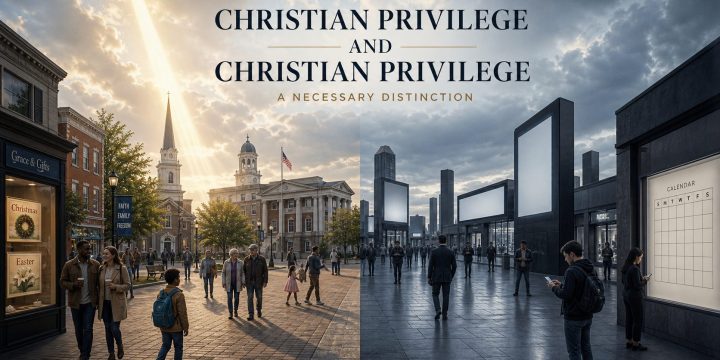
Christian privilege and Christian privilege: A necessary distinction The Wikipedia article on “Christian privilege” treats Christian privilege as an unearned “social advantage bestowed upon Christians in any historically Christian society.” Its basic descriptive point—that Christians in many Western nations enjoy cultural familiarity, holiday recognition, and symbolic visibility—is often accurate as sociology, and similar features are acknowledged in the overview at ChristianPrivilege.com. What the article smuggles in, however, is a moral verdict: that such asymmetry is presumptively unjust, akin to racial or gender privilege. From the perspective defended at ChristianPrivilege.com, the crucial missing step is the truth question. Every society “privileges” some moral and metaphysical vision: a secular‑liberal order privileges autonomy and expressive individualism; progressive regimes privilege therapeutic and identity‑based norms; Islamic societies may privilege Qur’anic law. The Wikipedia framework treats Christian norms as one arbitrary “identity”…
A Research Paper on the Cosmological Evidence for Divine Creation The first and most foundational argument for the Christian worldview is deceptively simple: the universe began to exist, and whatever begins to exist requires a cause outside itself. That cause, as philosophical and scientific reasoning converges to demonstrate, must be uncaused, timeless, spaceless, immaterial, and personal — a description that maps precisely onto the God of Christian Scripture. This paper examines the scriptural testimony that God created the universe, the philosophical and scientific evidence that corroborates it, and the decisive failures of the four principal naturalistic alternatives: the oscillating universe, the cosmic seed, the infinite (steady-state) universe, and the multiverse. Special attention is given to the logical self-destruction of Lawrence Krauss's multiverse argument, which commits the fundamental error of treating…
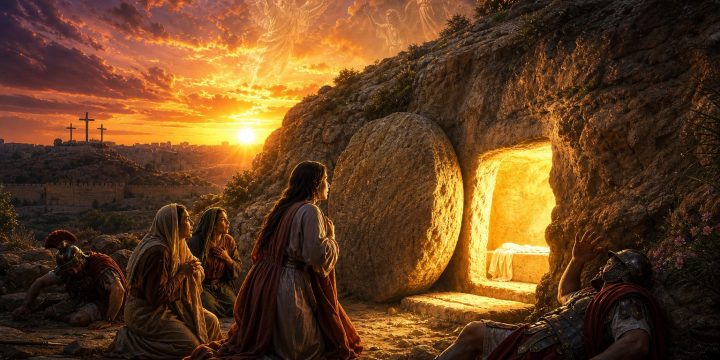
The resurrection of Jesus Christ is not merely a theological claim held by faith — it is a publicly proclaimed, historically investigated event that has withstood centuries of rigorous scholarly scrutiny. When evaluated by the same standards of evidence applied to any ancient historical question, the resurrection emerges as the most coherent explanation for a cluster of facts that even skeptical, non-Christian scholars are compelled to accept. This paper examines the historical evidence for the resurrection, the scholarly consensus across ideological lines, the failure of naturalistic alternatives, and the profound Christian Privilege of proclaiming a living Lord whose resurrection is grounded in space, time, and verifiable human testimony. As the Apostle Paul declared in the earliest creed of the Christian faith: "For I delivered to you as of first importance…
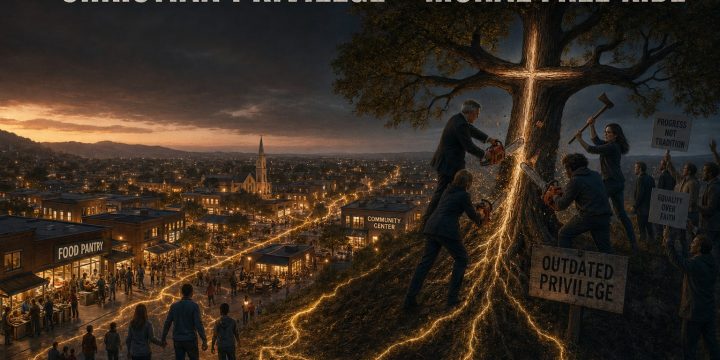
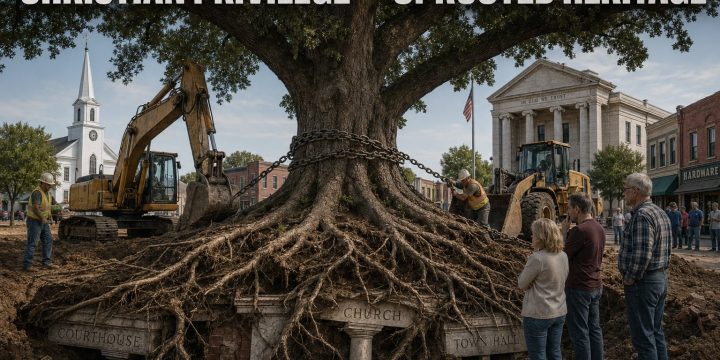
Christian Privilege and the Demand to Keep the Fruit but Cut the Tree One of the strangest features of the critique of Christian Privilege is that it often condemns Christianity as a source of public influence while continuing to rely on moral ideas that Christianity helped popularize, stabilize, and defend. The argument operates like someone denouncing a power plant while insisting the lights must remain on. Christianity is accused of excessive cultural inheritance at the very moment its critics continue spending the inheritance. That contradiction is not minor. It sits at the center of the entire debate. Modern critics of Christian Privilege regularly appeal to universal human worth, moral equality, concern for the vulnerable, conscience rights, and the duty to challenge domination. But those are not morally self-generating ideas. They came to the modern…
Christian Privilege and the Dream of a Neutral Winner The social criticism of Christian Privilege is often sold as a peace plan for a divided nation. The idea is straightforward enough: if Christianity loses its special status in public life—its assumed moral authority, cultural familiarity, and institutional influence—then the public square will become fairer, calmer, and less tribal. A single dominant identity will no longer overshadow everyone else. The temperature will drop. But this is one of the most dangerous illusions in modern public life. If the strongest version of the anti-Christian Privilege project were implemented, it would not produce neutrality. It would produce a new race for official status. Once public Christianity is framed as a problem to be contained, every other moral and political faction learns the same lesson: survival requires…
The controlling thesis of this article is straightforward: if the Christian Scriptures are true, then the central moral and political objections to Christian privilege lose much of their force, because a society is not acting irrationally or unjustly when it gives public honor, legal deference, or cultural preference to what is in fact true and good. That claim does not settle every prudential or constitutional question, and it does not justify cruelty, coercion, hypocrisy, or civil disabilities for dissenters. It does mean, however, that the modern critique of “Christian privilege” usually depends on a prior assumption that Christianity is merely one identity option among many and not the true account of God, man, sin, redemption, and public morality. That is why the order of argument matters. Critics of Christian privilege in America…
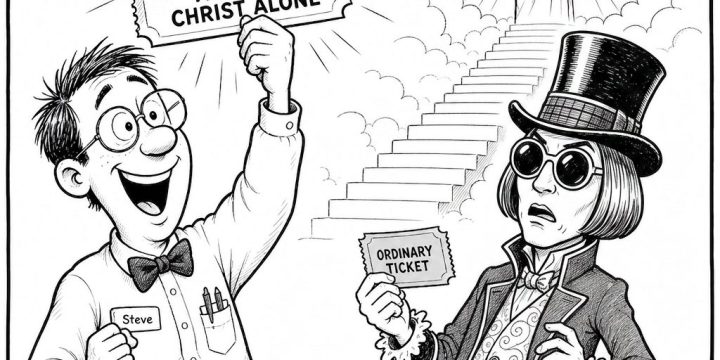
Christian Privilege Is Accepting the Real Golden Ticket When people talk about “privilege,” they usually mean advantages, status, or opportunities in this world. But there is a far greater privilege than any social, economic, or political advantage: the privilege of receiving the real golden ticket—salvation through Jesus Christ alone and the promise of eternal life. In the cartoon image, Steve realizes that what he’s holding is not a ticket to a factory or a fantasy, but to forgiveness, reconciliation with God, and everlasting joy in His presence. That picture is a powerful metaphor for what the Bible calls the gospel, the “good news” of Jesus Christ. The Golden Ticket We All Need The Bible says that every human being has the same basic problem: sin. Sin is not just “big” wrong things;…
If Christian Scriptures Are True, Don't Christians Deserve Privilege? The controlling thesis of this article is straightforward: if the Christian Scriptures are true, then the central moral and political objections to Christian privilege lose much of their force, because a society is not acting irrationally or unjustly when it gives public honor, legal deference, or cultural preference to what is in fact true and good. That claim does not settle every prudential or constitutional question, and it does not justify cruelty, coercion, hypocrisy, or civil disabilities for dissenters. It does mean, however, that the modern critique of “Christian privilege” usually depends on a prior assumption that Christianity is merely one identity option among many and not the true account of God, man, sin, redemption, and public morality. ... Read More Below…
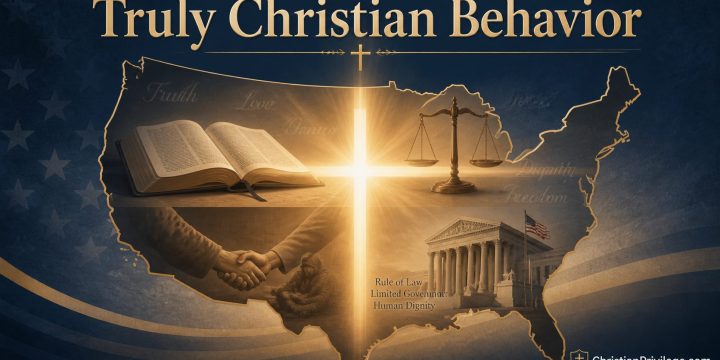
Christianity, at its core, is a faith system built on the twin commandments to love God with all one's heart and to love one's neighbor as oneself — a framework that has demonstrably shaped the most consequential nation in human history. The United States of America did not emerge from a vacuum. Its founding documents, its institutions, its culture of ordered liberty, and its eventual self-correction on historic moral failures all draw meaningfully from a Christian theological inheritance. To acknowledge this is not to claim the nation has been perfectly Christian — it has not — but rather to observe that its greatest achievements reflect Christian ideals applied faithfully, and its greatest failures reflect those same ideals abandoned or distorted. The modern critique of “Christian privilege” frames this legacy through…
A Response to the Critics of "Christian Privilege" in America Find the right tree on a hot August afternoon and you will understand something about civilization that no lecture can teach. The shade beneath a great oak is not an accident. It is the accumulated result of decades — sometimes centuries — of growth, of roots driving deep into the earth, of branches spreading wide because the seed and soil and years all conspired together in exactly the right way. You did not plant this tree. You arrived beneath it already grown. You are cool where others are not. You are sheltered where others burn. Now imagine someone standing at the edge of that shade, enjoying every benefit of it — the coolness, the breeze through the canopy, the sturdy…
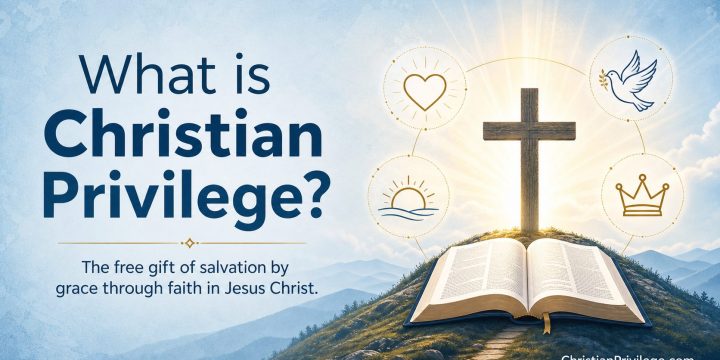
Christian Privilege, rightly understood through the lens of Scripture, is not a social construct or a cultural status symbol — it is a divine endowment. It is the extraordinary, unmerited standing granted to every believer in Jesus Christ by virtue of God's sovereign plan of salvation. This privilege originates not in human achievement, cultural dominance, or institutional power, but in the eternal will of God — a will that was set before the foundation of the world, progressively revealed through covenants and prophecy, definitively accomplished in the life, death, and resurrection of Jesus Christ, and now freely offered to every soul who believes. The pages that follow trace this great privilege from its primordial promise in the Garden of Eden through its prophetic unfolding in the Hebrew Scriptures, its magnificent…